You can't clean if it's not tidy, it can't be tidy... if you don't know where to put everything. Trivial? Yet in reality, thinking about our living spaces (home, office, car), in practice we all end up like flies in a glass the moment we try to apply such obvious reasoning.
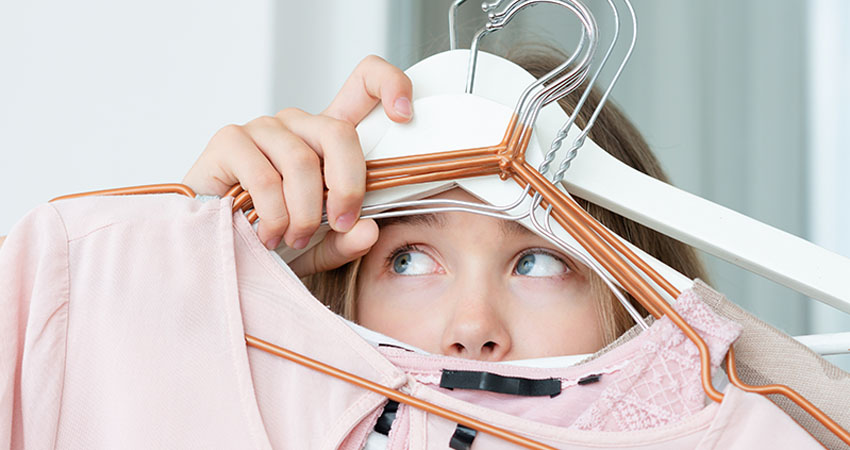
What to do? From Marie Kondo onwards, the gurus prevail. And why do they reign? Because we are all fascinated by their teachings - albeit valid ones - but then we disregard them. We find all sorts of excuses, and fall back into our habits, which we may consider as bad as they lead us to unwanted results. That is, if in the end our house yo-yoes between tidiness and disorder worse than our waistline between diets, it simply means that the method does not work. Or at least not for us.
And why doesn't it work? Because we make a personal adaptation of it, we bend it (every day a little more) towards our old habits, to the point of distorting it. Because we do not immediately admit that it is too rigid, too far from our normality.The question is whether we really want to change it, this messy normality, or whether we decide that we love it and that this is how it will be forever (we do not recommend this option, at least in its entirety).
Acceptance is good, improvement is imperative though, because it serves to give our minds oxygen, and a boost to our self-esteem, even if we do not aspire to the Perfect Housewife award.
 At the heart of the Konmari medot are instructions on how to fold clothes, T-shirts and any other garments in order to store them neatly in wardrobes and drawers.
In photo - Hotel 100% soft microfibre bath mat.
Inspiration may come not from the old or new tidying gurus, but from the experts in Lean Organisation. As chance would have it - one that many believe does not exist - the so-called “Toyota Method” originates from the same land from which the tidying-up artist comes: Japan. Getting an education on the subject is a bit challenging, and the differences between an industrial production flow and the action of tidying up can be too many to divert us from our goal.
The experts will forgive us if we attempt a summary here, taking only those principles that are most useful to us.It must be said right away that entering a lean company gives an incredible impression: everything is tidy, clean, movements fluid, spaces well utilised, people and objects in harmony. Drawing a parallel with our own home is really a snap. What do we learn? That the less “stuff” the better. It is not a war on trinkets (or maybe it is), but an invitation, let's say a clarion call, to keep only what is useful. Useful means that it is used, but also that it is beautiful (useful to improve the quality of our daily life) and that it enriches our spirit.
These “things” will then have to be organised, i.e. positioned logically, and conveniently. For example, based on when they are needed, how much they are spent, and who and how they will be used. Reaching, using, and storing everything should be simple, so that it is always done in the best way. The order, in this way, will (almost) take care of itself. Children's toys will be stored on the floor, detergents in the laundry room, supplies in one pantry, and so on.
 A tidy room immediately generates a feeling of tranquillity and serenity In photo - Antique Blue furnishing carpet
Famous is now the motto “a place for everything and everything in its place”.”, a lesson from Toyota's own engineers.
Essential versus superfluous. The superfluous is made up of objects but also of actions: looking for one thing on three floors of the house, or in four different places, is definitely a waste of time, energy and patience.
Lean also has much to teach on the subject of “stocks”, but we will come back to that.
Among other imperatives, which will appeal to many, is that we can simplify, and sweeten, in “sharing the guidelines”. That is, everyone in the house must know the method, not only to be autonomous but above all to maintain the order created, and to avoid the “you do, I undo” game, which creates quite a few bad feelings. Establishing a shared concept of order that is sustainable (i.e. really appropriate for the people living in the house) has among its consequences a newfound harmony. And living well at home is one of life's finer pleasures.

Getting children used to tidying up from an early age not only serves for better organisation in the home but is above all an important lesson in autonomy that is fundamental for their growth towards independence.
Do you like these carpets?
Do you want to know your nearest dealer?
Enter your postcode and your e-mail address to receive a list of shops in your area.
Error: Contact form not found.